The government of Pakistan has made significant strides in providing financial assistance to low-income families through various welfare initiatives. Among these programs, the
Benazir Income Support Programme stands as a cornerstone of poverty alleviation efforts across the nation. To streamline access and improve transparency, the BISP 8171 web portal has emerged as a comprehensive online platform that enables beneficiaries to verify their eligibility, check payment status, and complete registration from the comfort of their homes.
This digital transformation has revolutionized how citizens interact with the Ehsaas Program, making it more accessible than ever before. Whether individuals need to send their CNIC to 8171 via SMS or prefer online verification through the portal, multiple pathways now exist to ensure that deserving families receive the support they need.
Understanding the BISP 8171 System
The BISP program operates through a sophisticated verification system designed to identify genuine beneficiaries. At the heart of this system lies the integration between NADRA databases and the National Socio-Economic Registry, which maintains comprehensive records of households across Pakistan.
When applicants engage with the 8171 service, their information undergoes thorough cross-verification against multiple data points. This ensures that financial assistance reaches those who genuinely require support, preventing fraud and maximizing the impact of government resources.
The Ehsaas Program has expanded significantly in recent years, incorporating initiatives like the Kafalat Program for women and Taleemi Wazaif for educational support. Each component works synergistically to create a comprehensive safety net for vulnerable populations.
How to Access the BISP 8171 Web Portal

Accessing the official web portal requires only a few simple steps. Citizens can navigate to the bisp.gov.pk website, where they will find dedicated sections for eligibility verification and registration processes. The interface has been designed with user-friendliness in mind, ensuring that even those with limited technical knowledge can successfully navigate the system.
Step-by-Step Portal Navigation
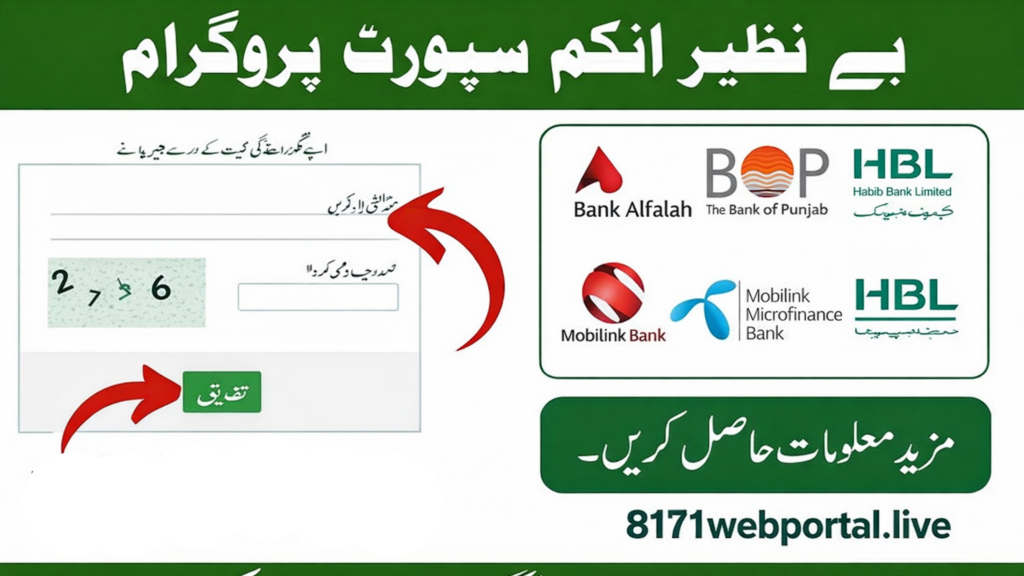
Upon visiting the portal, users encounter a clean dashboard presenting multiple service options. The primary function allows visitors to input their CNIC number for instant verification. This process connects directly to the NSER database, retrieving real-time information about registration status and payment eligibility.
For those preferring mobile access, the SMS method remains equally effective. By sending their 13-digit CNIC to the short code 8171, applicants receive immediate feedback about their enrollment status. This dual-channel approach ensures that technology barriers do not prevent deserving families from accessing benefits.
The system typically processes queries within seconds, displaying comprehensive information about monthly stipends, which currently range from PKR 12,000 to PKR 13,500 depending on household circumstances and program components.
Eligibility Criteria and Verification Process
Determining eligibility involves multiple factors that the BISP carefully evaluates. The program primarily targets families living below the poverty line, with particular emphasis on female-headed households and families with disabled members. Understanding these criteria helps applicants assess whether they qualify before beginning the registration process.
Primary Eligibility Requirements
The NSER survey forms the foundation of eligibility determination. Families must have participated in this socio-economic census, which collects detailed information about income levels, asset ownership, housing conditions, and household composition. This data undergoes rigorous analysis to identify those most in need of financial assistance.
Applicants should ensure their CNIC details match exactly with records maintained by authorities. Any discrepancies can lead to verification failures, potentially delaying or preventing enrollment. Biometric verification at designated tehsil offices provides an additional layer of authentication for new applicants.
The Benazir Income Support Programme also considers geographic factors, recognizing that poverty manifests differently across urban and rural contexts. This nuanced approach ensures equitable distribution of resources throughout Pakistan.
Online Registration Through the Portal
While many beneficiaries were enrolled through previous NSER surveys, new applicants can initiate registration through the online platform. This process has been streamlined significantly compared to earlier methods that required physical visits to offices.
Completing Your Online Application
The registration form requests essential information including CNIC details, contact numbers, household composition, and income sources. Accuracy remains paramount, as the system cross-references submitted data with existing government databases. Any inconsistencies trigger additional verification steps that can extend processing times.
After submission, applicants receive a reference number enabling them to track their application status through both the web portal and the 8171 SMS service. This transparent tracking mechanism keeps applicants informed throughout the evaluation period.
Those without internet access can still apply by visiting their nearest BISP tehsil office, where staff assist with completing applications and conducting biometric verification. This inclusive approach ensures that digital literacy does not become a barrier to accessing support.
Checking Payment Status and Balance
Once enrolled, beneficiaries need convenient methods to monitor their payment schedules and verify when funds become available for withdrawal. The Ehsaas Program has implemented multiple checking mechanisms to accommodate different technological capabilities among recipients.
SMS Balance Inquiry
The simplest method involves sending the beneficiary CNIC to the short code 8171. Within moments, recipients receive a detailed SMS outlining their current payment status, the amount available for collection, and the designated distribution point. This service operates round the clock, providing instant access to critical financial information.
For those preferring visual interfaces, the web portal displays similar information with additional details such as payment history, upcoming disbursement schedules, and any pending verification requirements that might affect future payments.
Understanding Payment Schedules
The BISP typically disburses payments quarterly, though emergency situations may trigger additional distributions. The current standard payment stands at PKR 13,500 per quarter, though variations exist based on specific program components like educational stipends under Taleemi Wazaif.
Recipients can collect funds from designated HBL ATM locations or authorized payment centers. The system sends advance notifications via SMS when payments become available, eliminating unnecessary trips to collection points.
Troubleshooting Common Portal Issues
Despite the system’s robustness, users occasionally encounter technical difficulties or receive unexpected verification results. Understanding common problems and their solutions helps beneficiaries resolve issues efficiently without requiring office visits.
CNIC Verification Failures
When the portal fails to recognize a CNIC, several factors might be responsible. Expired identification cards, recent updates not yet synchronized across databases, or data entry errors during initial NSER surveys can all trigger verification problems.
The recommended first step involves double-checking that the entered CNIC matches the card exactly, including all digits without spaces or dashes. If problems persist, visiting a BISP office for manual verification typically resolves database synchronization issues.
For those showing as ineligible despite meeting criteria, the appeals process allows for case-by-case review. Documentation proving eligibility—such as income certificates or disability attestations—can support these appeals through official channels.
Mobile Application and Alternative Access Methods
Recognizing that smartphones have become increasingly prevalent even in rural areas, the program has developed mobile solutions complementing the web portal. These applications provide identical functionality while optimizing the interface for smaller screens and touch-based navigation.
Users can download official applications from authorized sources, ensuring security and authenticity. These apps store encrypted credentials, allowing returning users to check status updates without repeatedly entering their CNIC information.
For communities with limited internet connectivity, offline registration facilities at union council offices bridge the digital divide. Staff at these locations access the same database systems, providing equivalent services to those available online through the BISP portal.
Security and Privacy Measures
Given the sensitive nature of personal and financial information processed through the system, robust security protocols protect beneficiary data. The Ehsaas Program employs encryption standards comparable to banking systems, ensuring that CNIC numbers and other personal details remain confidential.
Users should exercise caution when accessing the portal from public computers or shared devices. Always logging out after checking information and avoiding saving credentials on untrusted devices helps maintain personal security.
The program regularly updates its security infrastructure to address emerging threats. Beneficiaries who suspect unauthorized access to their accounts should immediately contact helpline services or visit their nearest office to secure their enrollment.
Future Developments and Program Expansion
The government continues investing in technological improvements and program expansion. Plans include integrating additional databases to enhance verification accuracy and reduce processing times for new applications.
Partnerships with mobile network operators may soon enable balance checking through USSD codes, eliminating the need for internet access entirely. These developments aim to reach the most marginalized communities who currently face barriers to accessing digital services.
The Benazir Income Support Programme also explores opportunities to link beneficiaries with skills training and microfinance initiatives, creating pathways toward sustainable economic independence beyond temporary financial assistance.
Frequently Asked Questions
How long does verification take?
Instant verification occurs when checking eligibility through the portal or via 8171 SMS. However, new registration applications typically require several weeks for thorough processing and database verification before approval notifications are sent.
Can family members check status on behalf of beneficiaries?
Anyone with access to the beneficiary CNIC can check status through public portals. However, for security purposes, updating information or collecting payments requires the registered beneficiary to appear in person with proper identification.
What happens if circumstances change?
Beneficiaries experiencing significant changes in household income, composition, or other relevant factors should report these updates through official channels. The program conducts periodic re-verification to ensure continued eligibility, maintaining program integrity while supporting those genuinely in need.
Conclusion
The BISP 8171 web portal represents a significant milestone in Pakistan’s efforts toward transparent, accessible social welfare delivery. By combining traditional SMS verification with modern online platforms, the program ensures that geographic location and technological literacy do not prevent deserving families from accessing vital financial assistance.
Whether checking eligibility for the first time, monitoring payment schedules, or completing registration, beneficiaries now enjoy multiple convenient pathways to engage with the Ehsaas Program. This digital transformation has reduced bureaucratic hurdles while strengthening accountability through real-time data access.
As the BISP continues evolving, the commitment to poverty alleviation through innovative service delivery remains constant. The portal stands as a testament to how technology can enhance government initiatives, making them more responsive to citizen needs while maintaining the security and verification standards necessary for responsible resource distribution.
For the latest information and to access services, citizens should visit the official BISP website or utilize the reliable 8171 SMS service that has become synonymous with accessible welfare verification across Pakistan.